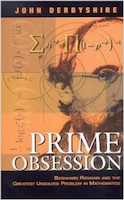
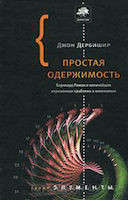
This piece of mathematical doggerel was written by Tom Apostol (lines 1-32, 1955) and Saunders MacLane (lines 33-40, 1973); it was included as an appendix in John Derbyshire's book about the Riemann Hypothesis, Prime Obsession (2003). This translation accompanied the Russian edition (Prostaya Oderzhimost', A.M. Semikhatov, 2008).
                            Где же нули у функции дзета?
   (to the tune of "Sweet Betsy from Pike"; words by Tom Apostol and Saunders MacLane)

Where are the zeros of zeta of s?                      Где же нули у функции дзета?
G.F.B. Riemann has made a good guess:                  Нам Риман оставил догадку про это:
"They're all on the critical line," stated he,         «На критической линии, там они все,
"And their density's one over two pi log T."           А их плотность -- один-на-два-пи ln T».

This statement of Riemann's has been like a trigger,   И эта гипотеза, словно заноза,
And many good men, with vim and with vigor,            Многих людей довела до психоза.
Have attempted to find, with mathematical rigor,       Стремились они дать точный расчет,
What happens to zeta as mod t gets bigger.             Что происходит, когда t растет.

The efforts of Landau and Bohr and Cramér,             И Бор, и Крамер, и Ландау, и Харди
Hardy and Littlewood and Titchmarsh are there.         Среди одержимых шли в авангарде.
In spite of their effort and skill and finesse,        Но все-таки даже они не смогли
In locating the zeros there's been no success.         Уверенно все перечислить нули.

In 1914 G.H. Hardy did find,                           Впоследствии Харди сумел доказать,
An infinite number that lie on the line.               Что на этой прямой их -- несметная рать.
His theorem, however, won't rule out the case,         Но его теорема все ж не исключает,
That there might be a zero at some other place.        Что где-то еще те нули обитают.

Let P be the function pi minus Li;                     Пусть P будет пи минус Li -- вот прелестно!
The order of P is not known for x high.                Но как там с порядком у P -- неизвестно.
If square root of x times log x we could show,         Если корень из x ln x -- потолок,
Then Riemann's conjecture would surely be so.          То гипотезу Римана вывесть я б смог.

Related to this is another enigma,                     Вопрос о μ(σ) задал Линделёф;
Concerning the Lindelöf function mu sigma,             Над ним потрудилось немало умов.
Which measures the growth in the critical strip;       Проверим критическую полосу,
On the number of zeros it gives a grip.                И сколько нулей там -- как на носу.

But nobody knows how this function behaves,            Но функция эта ведет себя сложно;
Convexity tells us it can have no waves.               Ее изучили, насколько возможно.
Lindelöf said that the shape of its graph              «График должен быть выпуклым, -- смог он сказать, --
Is constant when sigma is more than one-half.          Если сигма сама превосходит 0.5».

Oh, where are the zeros of zeta of s?                  Так где же нули у функции дзета?
We must know exactly. It won't do to guess.            Даже через столетие все нет ответа.
In order to strengthen the prime number theorem,       А ТРПЧ можно все улучшать,
The integral's contour must never go near 'em.         Но контур обязан нули избегать.

André Weil has improved on old Riemann's fine guess    Тем временем Вейль обратился к предмету,
By using a fancier zeta of s.                          Используя более хитрую дзету.
He proves that the zeros are where they should be,     Коль характеристика поля равна
Provided the characteristic is p.                      Простому числу -- теорема верна.

There's a moral to draw from this long tale of woe     Мораль этой притчи нетрудно понять,
That every young genius among you should know:         И всем юным гениям следует знать:
If you tackle a problem and seem to get stuck,         Если не выручает обычный подход,
Just take it mod p and you'll have better luck.        То по модулю p -- авось повезет!
Some notes for non-mathematicians:
BACK to "translations"